When you assess the health of your ministry, do you just consider attendance and giving trends, or salvations and water baptisms? I’d like to encourage you to assess the strength of your financial operations and practices, as well. Here are five keys that will reduce financial risk while increasing the overall health of your ministry.
Key #1: Establish written policies and procedures to define expectations and provide accountability.
Documented policies and procedures are an important component of strong internal controls. Your operations manual should define those processes and policies that have been established to safeguard assets, promote stewardship and ensure ministry goals are met. They should include how contributions are handled, how disbursements are requested and approved, and what documentation is needed to support a purchase.
The manual should also detail the bookkeeping staff’s daily and monthly processes which will ensure continuity of financial operations if there are changes in bookkeeping staff.
Written policies will increase the health of your ministry by minimizing confusion, establishing a baseline for employee expectations and provide accountability.
Key #2: Segregate financial duties to minimize risk, promote accountability and provide peace of mind.
Segregating financial duties is the foundation for strong internal controls. The financial responsibilities of the ministry shouldn’t be confined to only one person. Several people should be involved in processing contributions, approving purchases, signing checks, recording financial activity and reconciling bank accounts.
For example, the person who writes the check and enters the payment in the accounting system, should be different from the person who approves the invoice and signs the check. Additionally, the person who reconciles the bank accounts shouldn’t sign checks or make deposits.
In smaller churches, some of these duties are combined out of necessity. However, other compensating controls and reviews should be implemented to safeguard church funds.
A well-designed system of internal controls will increase the health of your ministry by minimizing risk, promoting accountability and providing peace of mind.
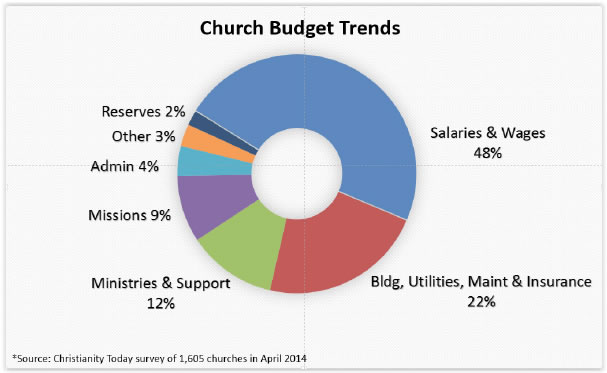
Key #3: Prepare a budget that reflects priorities, and monitor activity.
An effective budget should be carefully prepared based on ministry needs and reflect the priorities of church leadership.
Each month, the revenue and expense activity should be compared to the budget projections. Make course-corrections as soon as possible when projections aren’t tracking with actual activity. This will help you effectively manage current activity to ensure your year-end priorities and goals can still be met.
You can help improve the overall health of your ministry through a carefully prepared budget that shapes and controls your activity throughout the year.
Key #4: Insist on accountability and transparency for all financial transactions.
Accountability isn’t red-tape or bureaucracy, but a biblical principle—it promotes good stewardship and protects church leaders. Your financial policies should always require receipts and invoices when paying bills or making reimbursements. If the church has business transactions with staff or family members, they should be approved by other leaders not involved in the transaction. Maintain a record of all financial transactions and prepare monthly reports for further transparency.
Key #5: Know when to ask for help.
Pastors should surround themselves with qualified accounting staff and volunteers. Leaders need to know applicable laws and requirements for nonprofits and where to find guidance, when questions arise. Seek help from a qualified expert and submit your organization to a regular audit—whether one prepared by an internal committee, or an outside specialist.
Implementing these keys will not only promote good stewardship, but will strengthen your financial operations and result in a financially healthy church.