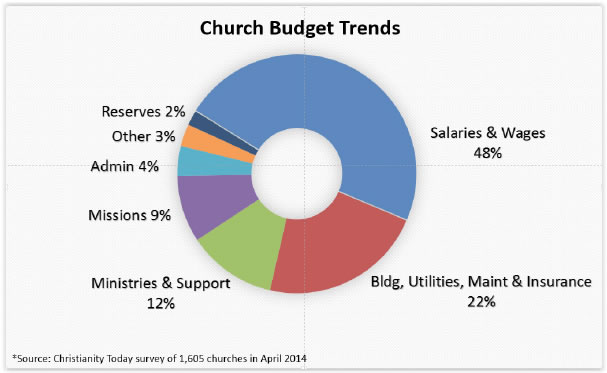
These percentages are not meant to be prescriptive, but comparing your church activity to these averages may be helpful or insightful.
Here are some additional ideas to consider as you develop and review your budget:
- Seek counsel within your network of pastors who may be in a similar sized church or face similar socio-economic factors. Even if your church doesn’t fit precisely into the same model as another church, the comparison of where your church is on staffing levels, debt, facility expenses, number of individuals being served, etc., can be extremely valuable in helping you establish an appropriate budget for your church.
- Consider your mission and vision for the church. Create a budget that reflects those priorities. For example, if the church has a vision to reach young families, more funds may be allocated to developing family-friendly environments, programs, and outreach opportunities.
- Consult experienced members within your church for help. Find businessmen and -women within your church who create and execute budgets as part of their daily job. They will have expertise that will be invaluable to you.
- Lastly, the IRS requires compensation provided to ministers to be reasonable. As you create your budget and review compensation packages, one way to determine reasonableness is to consult independent compensation surveys for comparison. Christianity Today has a great compensation tool for churches. You can find that at churchsalary.com.
The Southern Baptist Convention also publishes a compensation survey that is freely available on their website.