Who do I call first - the bank, an architect, or a builder?
This is one of the most common questions churches ask. To get a loan, the bank wants to know the cost of the project. To get the cost of a project you need a builder, but the builder needs a design which requires an architect. To pay an architect you need a loan from the bank!
So you know you need a bank, a builder, and a designer. But who do you call first? And does it matter which bank, builder, or designer you call? Yes, it matters a lot, and can make a huge difference in your project and your ministry.
God's Vision for the Ministry
First, before making any calls, reflect on the God-given vision for your ministry. Consider your mission, and how the right facility will help you accomplish it. Ministry need should always drive a church facilities project no matter the size. A project should meet your ministry needs, but should also fit within your available resources.
Resources for Accomplishing the Vision
Secondly, I recommend starting with a church lender. They understand church finances, budgets, vision, and ministry. A good lender will work with you to identify all your financial resources, and will help you identify the parameters of each—in other words, what you can afford. There are typically three sources of funding for a project: money you have, money you raise, and money you borrow.
Money you have is what is set aside in liquid funds for the purposes of a project. Make a clear distinction between this money and your cash-on-hand for operating and/or emergencies. Do not deplete your operating cash in order to build. That could cripple your ministry.
Money you raise through a stewardship campaign comes from your congregation and ministry partners that are giving to a specific project or purpose. Your lender or stewardship consultant can help you assess this potential and determine realistic goals.
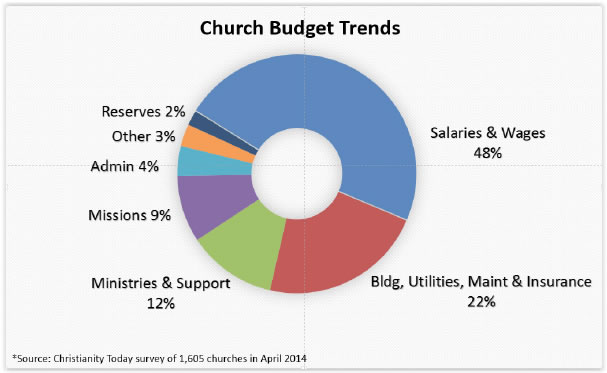
Money you borrow should be considered in light of your ministries, missions giving, salaries and other expenses. Debt is a serious matter—some to various ministries and missions. A good lender will not simply talk about how much you can borrow, but how much you should borrow.
Discuss a financing strategy rather than just a loan. A good strategy usually involves two or all three sources of funding mentioned above.
After clearly identifying your ministry needs and financial resources, you have a framework within which to approach a designer and builder to discuss a project that meets your ministry needs and your affordability&msadh;that’s the next step…
Consider a design-build approach to your project. The right relationship between the designer and builder will keep the project on the right ministry need and affordability track we mentioned above. This can take the shape of hiring a church design-build firm, or the more traditional approach of hiring an architect; either way, involve the builder in the process. He brings the knowledge of current market pricing to the design table, ensuring what is being designed fits your affordability.
Team Approach
Some of the best advice I can give is this: Let your lender, designer, and builder serve you as a cooperative team. Rather than having a bank, a designer, and a builder perform separate services that may or may not end up in the same place, engage the trusted sources above to work on the church’s behalf as a team to accomplish your ministry expansion goals within your resources.
Partnering with church design, construction, and financing experts will help ensure a smooth facilities expansion process that ends with the right project at the right price! Make their team part of your team, and keep God’s vision for your ministry at the center.